Stuck? Join the club.
We stay stuck in bad places. We gingerly touch our scars, defend ourselves. We try not to feel our fears and end up not feeling ourselves. Ignore the knot in the stomach. It will go away. Chin up.
The knot is a cry. We ignore it at our peril. The butterflies inside need to fly.
Therapy, ground down to its core, is a time, a place and a person safe enough – connected enough – to let a few butterflies out, to unravel the knot, to rebuild.
Should you ever feel it’s possible to give it a try, I’ll do my best to be there: to provide that connection.
People come to me for many reasons. From trauma, bereavement, depression and anxiety to anger management, sexuality, relationships and addiction.
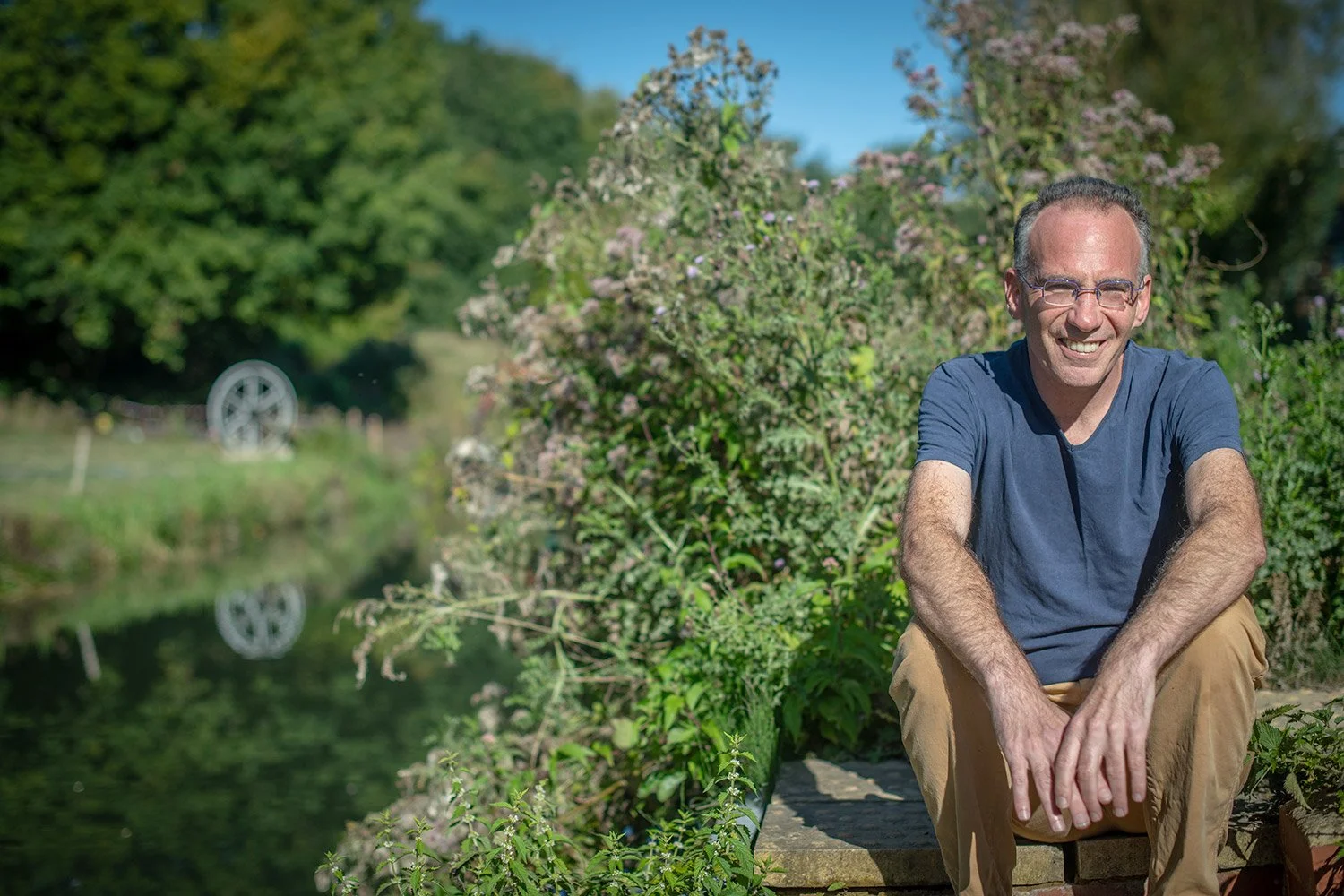
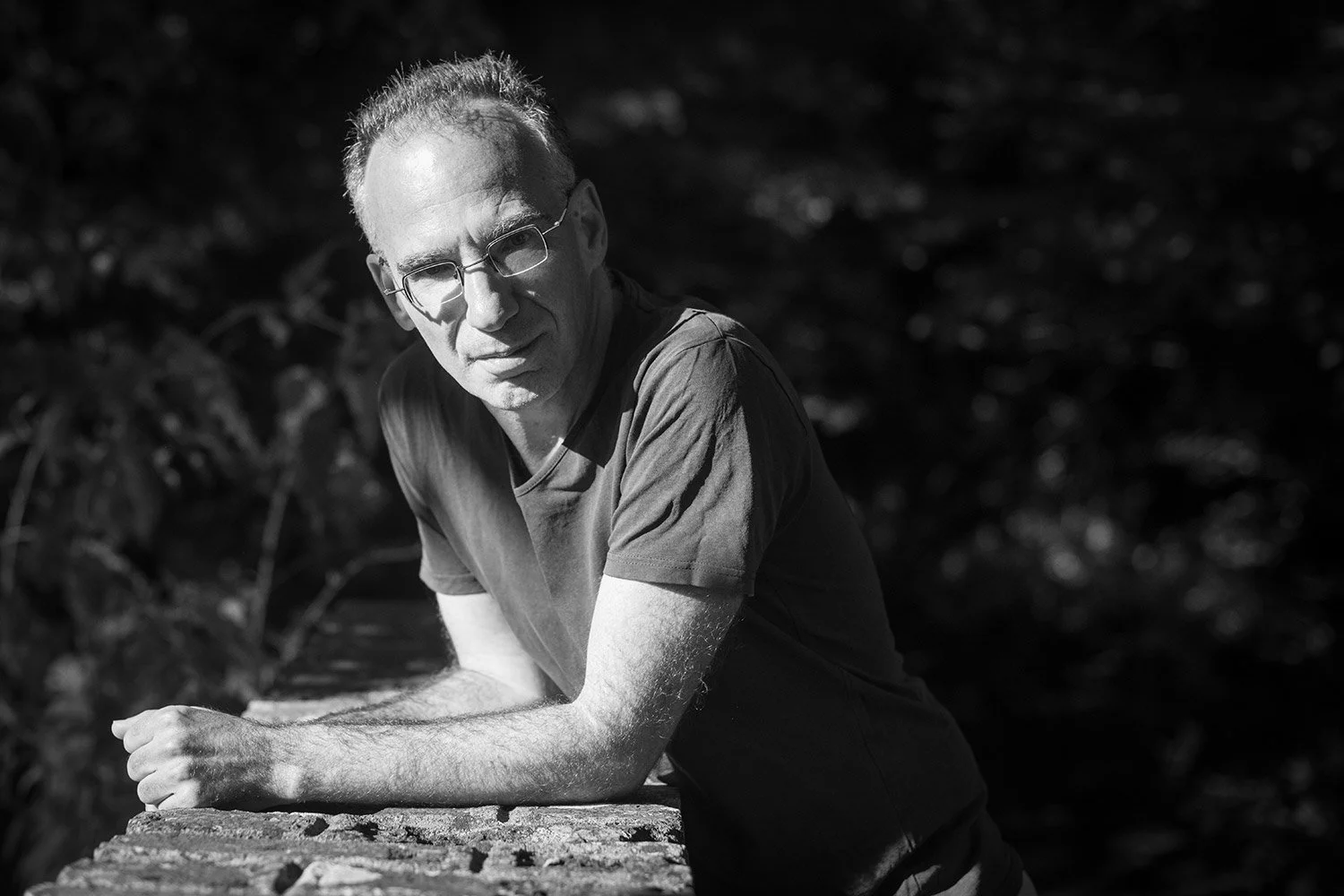
I'm Yaron White, a BACP-registered bibliotherapist based in Stroud, Gloucestershire.
What is bibliotherapy?
Bibliotherapy is a creative arts practice that weaves stories and texts into therapy.
It connects to the understanding that creativity is central to self-actualisation and growth, where stories function like dreams: expressions of unconscious material that can be explored safely.
Sometimes I’ll share a poem or passage that reflects what you’re experiencing. Sometimes you’ll bring something that speaks to you. Sometimes we’ll explore the stories you tell about your own life. The bibliotherapy happens through our conversations – it's not homework or formal exercises, but a way of using narrative and metaphor to access ourselves.
I hold a Master of Arts in Art Therapy (M.A.A.T.) with a specialisation in bibliotherapy from Kibbutzim College in Tel-Aviv, and a B.A in English and Critical Theory from London Metropolitan University.
My story
I became a therapist because I didn’t really have a choice. Life sucked. It all seemed so pointless. I gave it a try. Then another. I failed again and again. Everyone else seemed to be doing just fine.
I heard therapists help. Do they? Muttering to myself that this is one expensive waste of time I decided to give it a try.
Nothing changed. I’m still myself. The same fears, the same scars. It feels different though. I’m less ashamed of the scars. Some of them I even like now. My fears have faded, a bit. That feeling of being heard, understood – of being able to be myself – something of that slips out, from the clinic into life.
Everything changed.
After a few years of therapy, with life continually getting better. I decided to retrain as a therapist. I scaled back my career as a product manager in a software company and started out.
My experience began in a student placement in a residential care home working with children and young adults who had been removed from their homes by social services. I came for a year and stayed for six – progressing from student to staff.
I learned the depth and darkness of the pain we carry with us and how connecting to that pain brings growth that’s beautiful, strange and powerful.
I chose bibliotherapy because life is a story. We learn from stories and think in stories.
Will I give you a poem for homework? Heaven forbid. Will we find echoes of your struggles in a tale? Will you look at your story in a new light? I hope so.
It’s hard to explain without vagueness. Confidentiality. I can’t tell another person’s tale; I’ll never tell yours. Therapy works in practice. Seen from the outside, it can be daunting. The promises so grand, the cost so high, the rewards so ill-defined.
The knot and the butterfly. If you feel them – if you need to feel them – I’m here to help.
How it works
I offer two forms of therapy: one-to-one and through correspondence.
One-to-one in person therapy
This usually takes place in weekly 50-minute sessions, in my clinic in Stroud or an online video call.
One-to-one correspondence therapy by email
Email therapy develops a therapeutic relationship through scheduled written exchanges. We agree times - for example, you write by Wednesday, I respond by Friday. Each exchange runs around three pages (roughly 1000 words).
The writing itself is therapeutic. Putting experience into words creates different access to what you're feeling and thinking than spoken conversation allows. The exchange has rhythm and continuity; you can return to previous letters as part of the work. And as with in-person sessions, stories and texts naturally become part of our written conversation - references that help illuminate what you're exploring.
We use secure encrypted email (ProtonMail) to keep our exchanges confidential. It's free and simple to set up, and I'll send you instructions.
What it costs
Both one-to-one in-person and correspondence therapy cost £60 a session.
To help you get started and decide if we’re the right fit, I offer a discounted first session – or first letter – for £35.
As a Registered BACP Member (418046), I follow BACP ethical guidelines in my work.
Get started
Every counselling relationship starts with an awkward first chat.
We should talk.
Take the first step:
Email yaron.therapy@proton.me
Fill in the contact form.
Or text me on 07823 424936 to schedule a chat
I will reply within 2 working days to all queries.